Google Unveils Gemini Enterprise Agent Platform and New TPU Chips at Cloud Next 2026
At its annual Las Vegas conference, Google consolidated its AI products under a unified enterprise agent brand and announced a $750 million fund to help cloud partners sell AI agents to businesses.
Google used the opening keynote of Cloud Next 2026 in Las Vegas on April 22 to announce a sweeping consolidation of its AI offerings under the Gemini Enterprise umbrella. Vertex AI has been rebranded as the Gemini Enterprise Agent Platform, and Google Agentspace, the employee-facing AI assistant, has been absorbed into a single unified product called Gemini Enterprise.
The company positioned the moves as the beginning of what it called the agentic era of enterprise computing.
The platform includes a no-code agent builder for Google Workspace users, a redesigned developer environment with access to more than 200 models including third-party options such as Anthropic's Claude, a production-grade Agent2Agent protocol for cross-platform agent coordination, and managed Model Context Protocol servers across Google Cloud services. A web-browsing agent called Project Mariner is also part of the rollout.
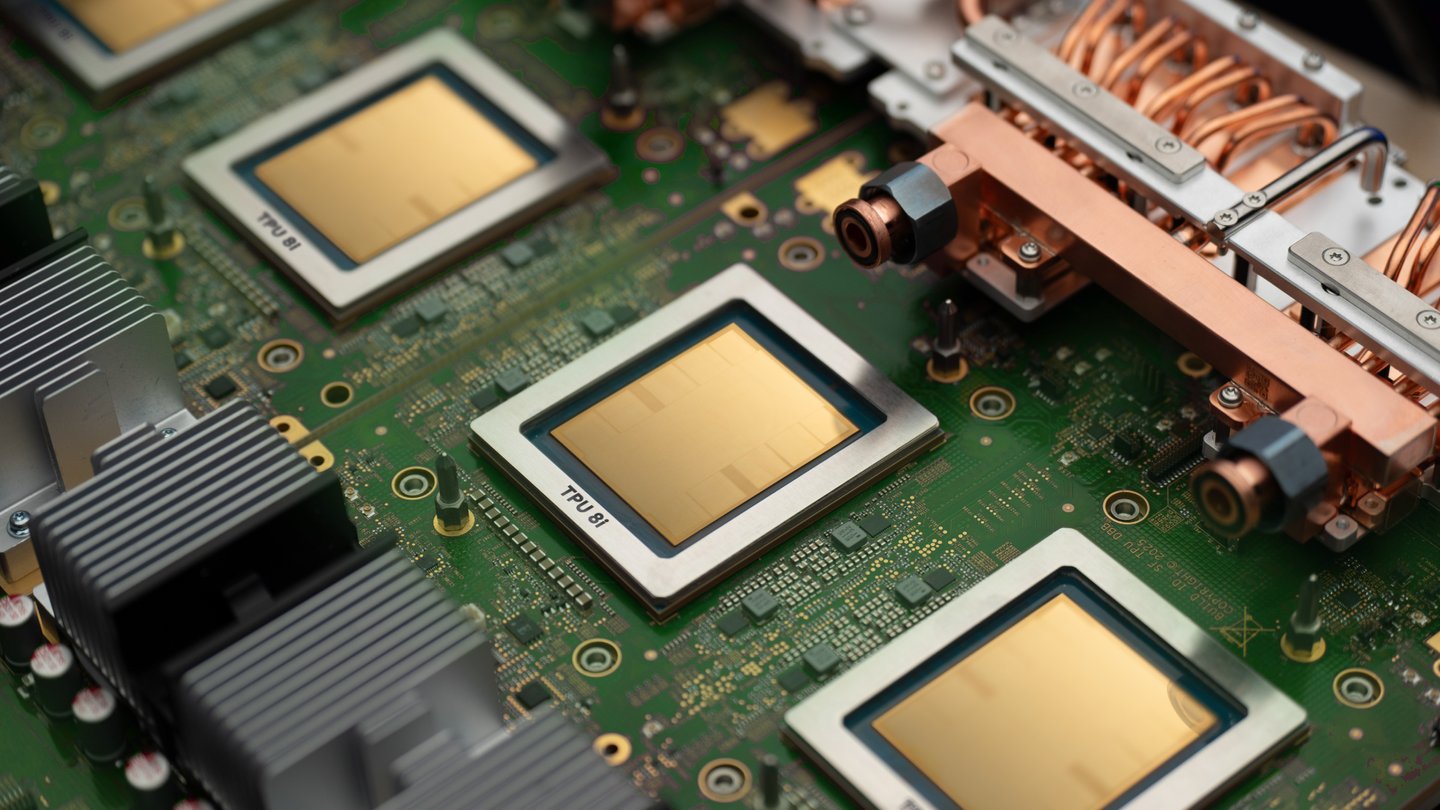
Alongside the software announcements, Google revealed two eighth-generation Tensor Processing Units designed specifically for AI workloads. TPU 8t is optimized for frontier model training and can run complex models on a single massive memory pool.
TPU 8i is purpose-built for agentic inference, designed to complete multi-step reasoning and planning tasks quickly enough to support real-time agent experiences. Both chips are expected to reach general availability later in 2026.
Google also earmarked a $750 million budget to help cloud partners — ranging from startups to large consulting firms — sell AI agents to enterprise customers. The funds can be applied to Gemini proof-of-concept projects, forward-deployed Google engineers, cloud credits, and deployment rebates.
CEO Sundar Pichai said in a video message that Alphabet's total capital expenditure for 2026 had risen to approximately $185 billion, up from $31 billion four years ago.
Read the original reporting at Google Blog.