Google's March AI recap: Search Live goes global, Gemini gets personal memory, and a new audio model debuts
Google's monthly roundup confirms a Gemini platform that is becoming more deeply personalized, more globally accessible, and more competitive with real-time audio rivals like GPT-4o voice.
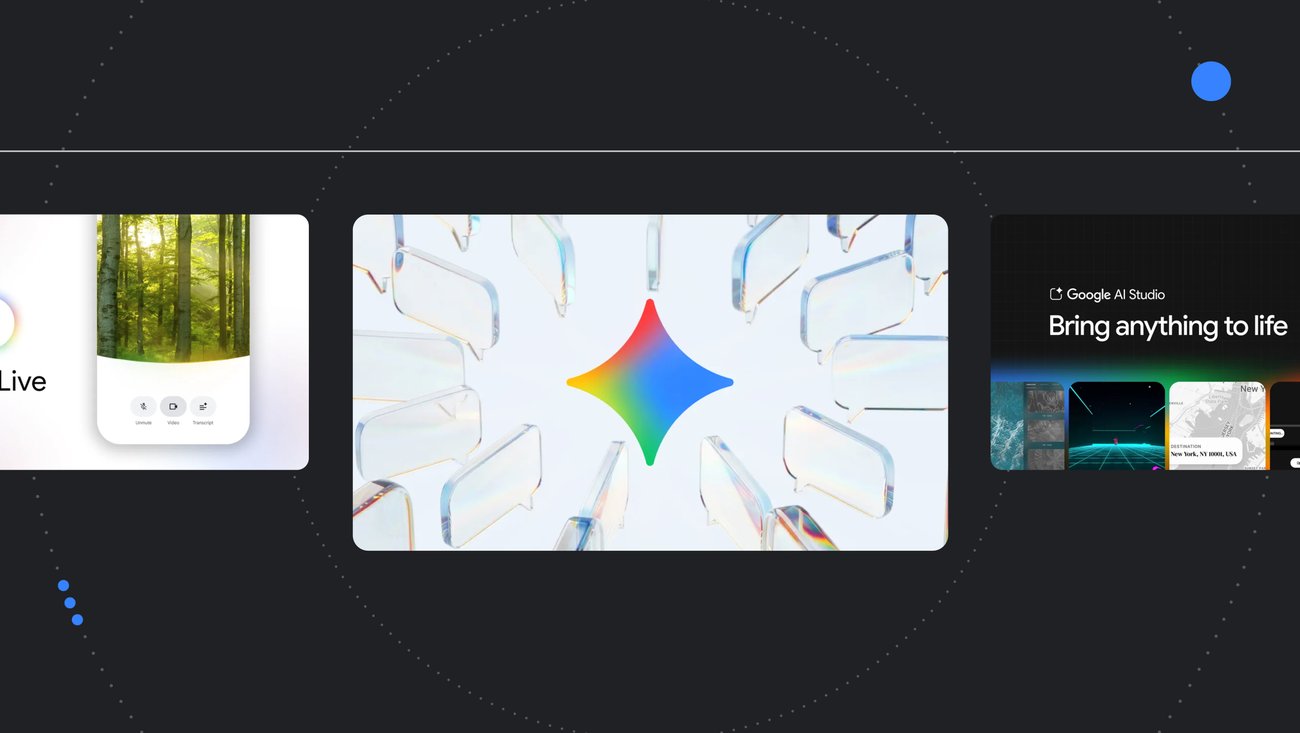
Google published its monthly AI recap on April 1, summarizing the major Gemini and Search updates it shipped throughout March. The recap confirmed that Search Live — the feature enabling real-time back-and-forth dialogue using voice or camera input — has expanded to everywhere AI Mode is available, covering more than 200 countries and territories.
Users can now engage in hands-free troubleshooting, get real-time travel tips, and identify objects on the go through the Google app.
The expansion of Personal Intelligence to AI Mode in Search, Gemini in Chrome, and the Gemini app across the US was highlighted as a signature March development. The feature securely connects Gemini to a user's Gmail, Google Photos, and YouTube history to generate personalized responses — shopping recommendations tailored to the user's style, or travel itineraries based on existing plans — while allowing users to control exactly what Gemini can access.
On the model side, Google released Gemini 3.1 Flash Live as its best audio model to date, designed to cut response latency to the point where conversation feels natural rather than mechanical. The model is already running in Search Live and Gemini Live globally.
Google also released Gemini 3.1 Flash-Lite, a faster and cheaper model optimized for cost-sensitive and real-time applications.
For creative applications, Google introduced Lyria 3 Pro, extending AI-generated music tracks to up to three minutes with detailed control over song structure. Workspace productivity tools were upgraded for AI Ultra and Pro subscribers, with Gemini now able to synthesize information across files, emails, and the web.
A new vibe-coding feature in Google AI Studio, powered by the Antigravity coding agent, allows developers to turn prompts into production-ready apps with database and real-world service integrations.
Read the original reporting at Google Blog.