Nvidia Launches Space Computing Initiative, Targets Orbital AI Data Centers
Jensen Huang declared that space computing "has arrived" as Nvidia announced chip platforms for orbital deployments in partnership with Axiom Space, Starcloud, and Planet.

Alongside its sweeping lineup of terrestrial AI infrastructure announcements at GTC 2026, Nvidia introduced a new space computing initiative on Monday, with CEO Jensen Huang declaring that the era of AI in orbit has officially arrived. The company revealed plans to bring accelerated computing to orbital data centers, partnering with commercial space companies including Axiom Space, Starcloud, and Planet to deploy AI processing capabilities beyond Earth's atmosphere.
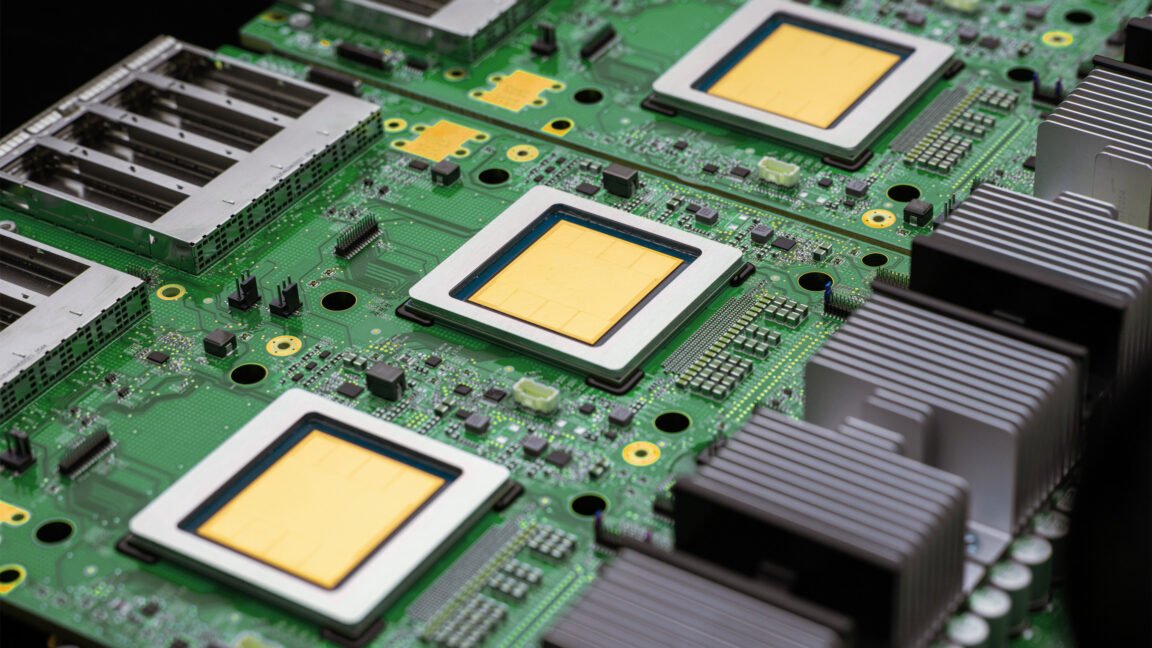
At the center of the announcement is Nvidia's Vera Space-1 Module, built around the IGX Thor and Jetson Orin chips. Both processors are specifically engineered for environments constrained by size, weight, and power — properties that are non-negotiable for spacecraft.
The IGX Thor, which also became generally available this week for industrial edge deployments on Earth, is designed to handle real-time sensor processing and AI inference in demanding physical environments, making it suitable for the thermal extremes and radiation environments encountered in low Earth orbit.
Planet Labs, one of the launch partners, is already using IGX Thor in its Owl satellites to transform terabytes of multidimensional satellite imagery into actionable intelligence in orbit, reducing the need to downlink raw data to ground stations. Researchers at CERN are also using IGX Thor for physics-inspired AI models, processing massive data streams at high throughput — illustrating the chip's reach across the most demanding compute environments.
Huang positioned the space computing push as a natural extension of Nvidia's broader vision to make accelerated computing ubiquitous across every layer of the world's infrastructure. The company acknowledged that several engineering challenges remain before full orbital data centers become operationally viable, but framed the GTC announcement as the beginning of a long-term buildout.
The initiative is part of a broader pattern in which hyperscalers and AI infrastructure providers are exploring space-based compute as terrestrial power and land constraints become increasingly binding on AI expansion.
Read the original reporting at CNBC.